
Highlights
- 2026 outlook raised:
- underlying EBIT margin of around 7.5% (previously: towards 7.3%)
- revenue unchanged at around €3.1 billion
- Order book of € 4.0 billion (2025: € 3.3 billion) with quality of orders increasing
- Total number of homes sold YTD (through October): 2,085 (2025 YTD: 2,313)
- Opening of the Modulekracht facility for the assembly of prefabricated building services modules
Ton Hillen, CEO Heijmans
“The scale of the construction challenge in the Netherlands remains as great as ever. While residential construction continues to be affected by the all-too-familiar bottlenecks, demand for infrastructure, energy supplies and non-residential building continues to grow. Thanks to our broad positioning in the Living, Working and Connecting business segments, Heijmans continues to perform strongly overall. In doing so, we remain committed to our ‘Together towards 2030’ strategy and to the choices we have made in recent years. We focus on projects that align with our expertise and we prioritise margin over volume. This selectivity makes us resilient and underpins our profitability. The development of our activities gives us confidence for the remainder of 2026. We are therefore raising our outlook for this year.”

Developments per segment
Living
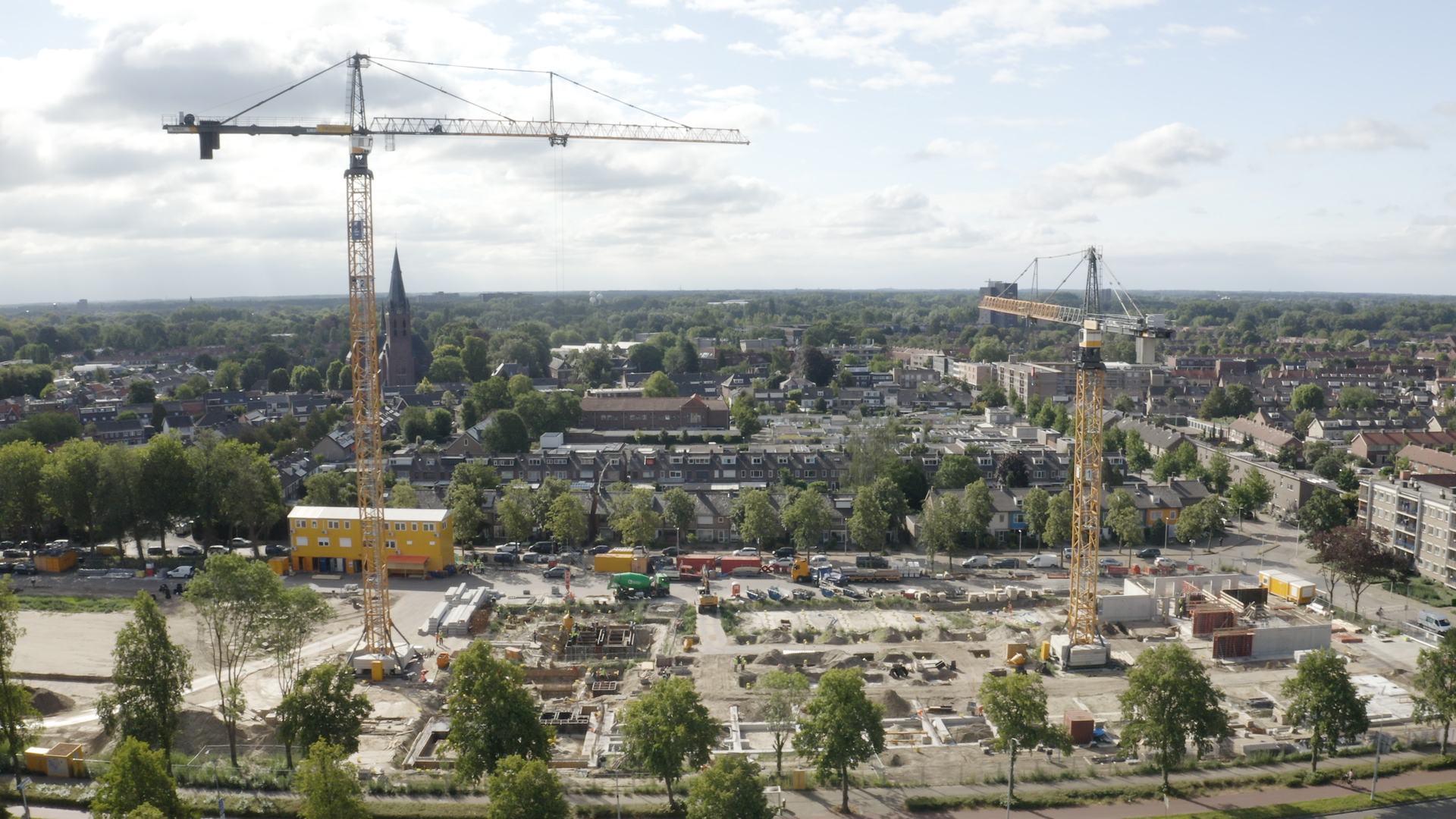
Home sales in this period were once again lower than in the previous year, a trend that Heijmans had anticipated. The housing construction challenge in the Netherlands remains significant, but market delivery is being hampered by a number of factors, including grid congestion, complex planning permission procedures, rising mortgage interest rates and the reluctance of institutional investors to invest in new developments. We are also seeing differences in market dynamics between urban and suburban developments. Suburban detached homes, in particular, are still selling quickly. One clear example of this is the Nieuw Boekhorst area development in Voorhout, where work is progressing rapidly and where, among other things, we are using industrial-scale housing construction methods. The ongoing development of Pannenschuur in Oisterwijk also underlines the continuing need for new residential areas. Construction is also progressing on the Atlas (Rotterdam) and Bellevue (Utrecht) inner-city projects. With our portfolio spread, across both urban and suburban segments, we are well positioned to respond to these varying market conditions. Looking ahead to 2027, we anticipate that the number of homes sold will remain under pressure.
Working
In the Working business segment, our activities are developing as expected. Major projects, including the Physics building for the Delft University of Technology, are progressing according to plan. In addition, demand for the management, maintenance and improvements to the sustainability of existing buildings continues to grow. Heijmans’ response to this includes the new construction partnership with Eindhoven Airport. Partly as a result of this, the proportion of recurring revenue in the Working business segment is continuing to increase. In addition to this, we have taken additional steps on the strategic pillar of Producibility in the Working business segment. Heijmans today started production at our new Modulekracht assembly facility in Dordrecht. By prefabricating and assembling technical installation modules for buildings, Heijmans can deploy scarce technical specialists more efficiently and continue to standardise the construction process, making it both safer and more predictable.
Connecting
In the Connecting segment, market dynamics remain positive, with a significant investment programme in areas including infrastructure and energy supply. The Ministry of Infrastructure and Water Management recently provided clarity on the prioritisation of projects for the maintenance, replacement and renovation of Dutch infrastructure. This increases predictability and confirms that there is sufficient scope for market players in this large-scale, long-term programme. Heijmans’ order book was further strengthened by a three-year extension of the performance contract for the maintenance of waterways in the eastern part of the Netherlands, an example of recurring business in the Connecting business segment. In addition, Heijmans completed the major Lauwersmeerdijk dyke project. The new coastal zone will help protect against rising sea levels, while also taking nature and biodiversity into account. Heijmans also took further steps in the energy transition. For example, it started construction of a new high-voltage substation in Hoogeveen. Together with the planned substations in Meppel and Zwolle, this will contribute to the expansion and reliability of the Dutch electricity grid. These developments offer Heijmans strong long-term prospects.
